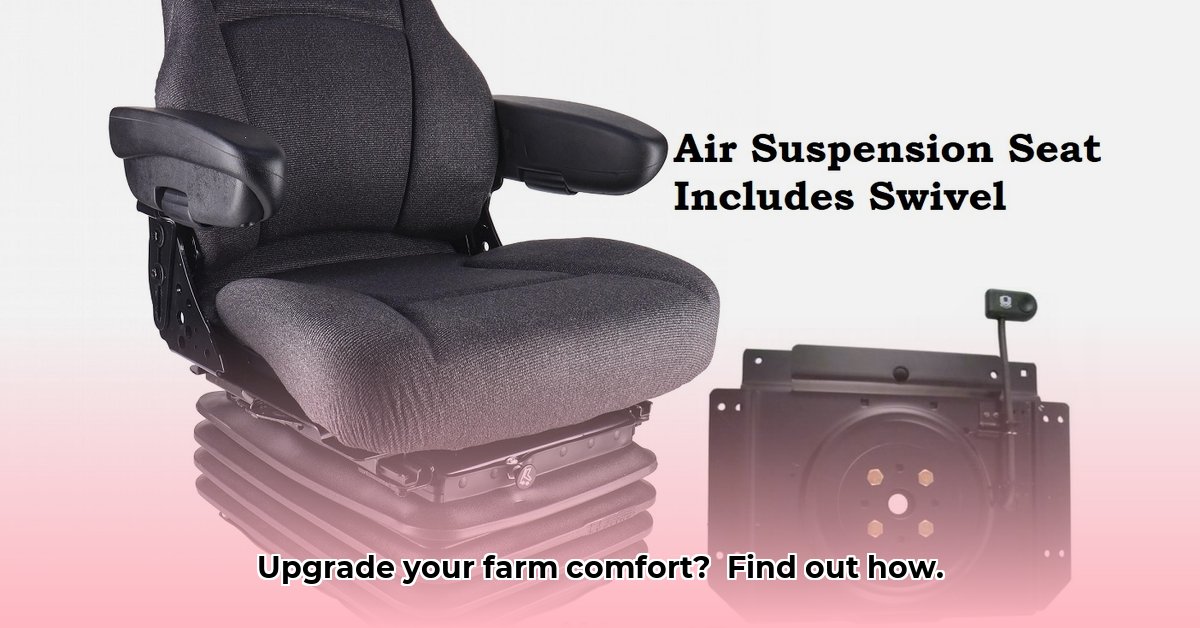
Long hours in a tractor cab can lead to fatigue, discomfort, and even injuries. But what if you could transform your workday? Air ride tractor seats offer a significant upgrade, boosting comfort, safety, and ultimately, productivity. This article explores the technology, benefits, and practical considerations of choosing and maintaining an air ride seat for your farm. For more information on specific models, check out these John Deere seat options.
How Air Ride Seats Enhance Your Farming Experience
Unlike standard spring suspension seats, air ride seats utilize inflatable bladders (air springs) to absorb shocks and vibrations. These bladders are filled with air, offering customized support based on your weight and preferences. The result? A dramatically smoother ride, significantly reducing fatigue and the jarring impact of uneven terrain. Many models allow for on-the-go air pressure adjustments, ensuring personalized comfort throughout the day. Isn't a more comfortable workday something you deserve?
Beyond Comfort: Safety and Productivity Gains
The advantages extend beyond a more comfortable seat. Reduced jarring motions improve focus, enhancing situational awareness and promoting safer operation. Less fatigue translates to increased efficiency and productivity – allowing you to work longer and more effectively. This means more acres covered, faster harvests, and ultimately, improved farm profitability. Did you know that studies show a direct correlation between operator comfort and efficiency in agricultural tasks?
Air Ride vs. Mechanical Suspension: A Detailed Comparison
Choosing the right seat is crucial. Let's compare air ride seats with mechanical suspension options:
| Feature | Air Ride Suspension | Mechanical Suspension |
|---|---|---|
| Comfort Level | Significantly more comfortable; adapts to various terrains and weights | Good, but less adaptable to terrain and weight changes |
| Vibration Reduction | Excellent; dramatically reduces vibrations | Moderate; noticeable vibrations remain |
| Maintenance | Requires occasional air pressure checks and occasional bladder replacement | Less frequent maintenance; needs occasional lubrication and part replacements |
| Initial Cost | Higher upfront investment | Lower initial cost |
| Customization Options | Highly adjustable for personalized fit | Limited adjustability options |
This comparison highlights the significant benefits, though the higher initial cost must be weighed against the long-term gains in comfort, safety, and productivity.
Selecting the Perfect Air Ride Seat: A Step-by-Step Guide
Choosing the right air ride seat requires careful consideration of several factors. Follow this structured approach for optimized results:
Step 1: Budget Assessment. Establish your budget. While air ride seats offer significant benefits, determine if the enhanced comfort and productivity justify the higher price point for your specific operation.
Step 2: Workload Analysis. Consider your typical workload and terrain. Heavy workloads and rough terrain necessitate a seat capable of providing all-day comfort.
Step 3: Terrain Evaluation. Uneven or rough terrain significantly benefits from the superior shock absorption of air ride systems. The smoother ride directly correlates to operator comfort and reduced fatigue.
Step 4: Feature Prioritization. Prioritize key features such as adjustability (height, lumbar support, armrests), material quality (durability, breathability), and additional ergonomic features.
Maintaining Your Air Ride Seat for Peak Performance
Proper maintenance ensures the longevity and continued comfort of your air ride seat. Follow these steps:
Regular Air Pressure Checks: Check and adjust air pressure according to the manufacturer's recommendations. Maintaining proper inflation is critical for optimal performance and comfort.
Component Inspection: Periodically inspect the bladder and other components for signs of wear or damage. Early detection allows for timely repairs, preventing more significant issues.
Professional Servicing: Schedule professional servicing as needed, consulting your seat’s manual or a qualified mechanic for guidance on this crucial component of upkeep.
The Long-Term Return on Investment (ROI)
Investing in an air ride tractor seat isn't just about comfort; it's a strategic decision with a strong ROI. While the upfront cost is greater than standard seats, the long-term benefits—reduced fatigue, enhanced safety, increased productivity, and improved operator health—significantly outweigh the initial expenditure. Consider the impact of a happier, healthier operator on your farm's bottom line. It's a smart investment in both your well-being and your farm's success.
"Investing in operator comfort isn't just about luxury," says Dr. Emily Carter, Agricultural Ergonomics Specialist at the University of Illinois. "It's directly linked to reduced injury rates, increased efficiency, and improved overall farm profitability."
Frequently Asked Questions (FAQs)
(Insert FAQs based on common reader queries regarding air ride tractor seats. These should cover topics such as installation, common problems, warranty information, and cleaning procedures.)